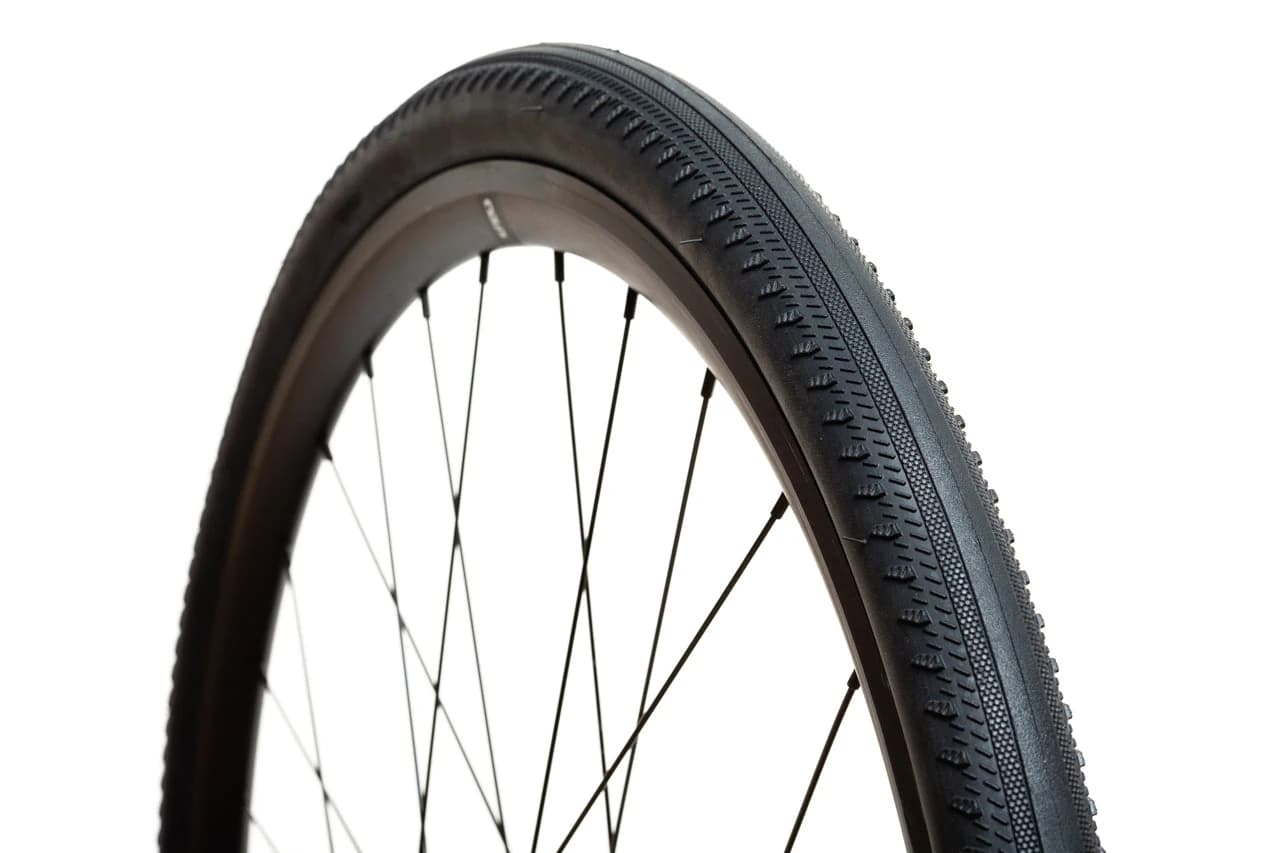
A wider tire does not automatically make a fixed gear slow. On broken pavement, the tire that lets you maintain control and pressure without bouncing can be faster in practice than a narrow tire pumped hard for appearance.
The usable size is limited by the frame, fork, brakes, rim, wheel position, and actual inflated tire—not only the number printed on the sidewall.
Quick comparison
| Width | Typical strength | Main tradeoff |
|---|---|---|
| 25c | Light, quick steering, generous clearance in older frames | Harsher and less forgiving on rough streets |
| 28c | Fast road feel with more comfort and grip | May already be tight in older race frames |
| 32c | Strong city balance for potholes and longer rides | Requires more clearance and compatible rims |
| 38c | Comfort, traction, hardpack versatility | Weight, aero cost, and fit become more important |
These are use-case descriptions, not universal pressure or speed claims. Tire construction can matter as much as labeled width.
Measure the installed tire
A “32c” tire can measure wider or narrower depending on its casing and the rim's internal width. Inflate it to a sensible pressure, then measure the actual width and height.
Check clearance at:
- both fork blades and the fork crown;
- both chainstays and seatstays;
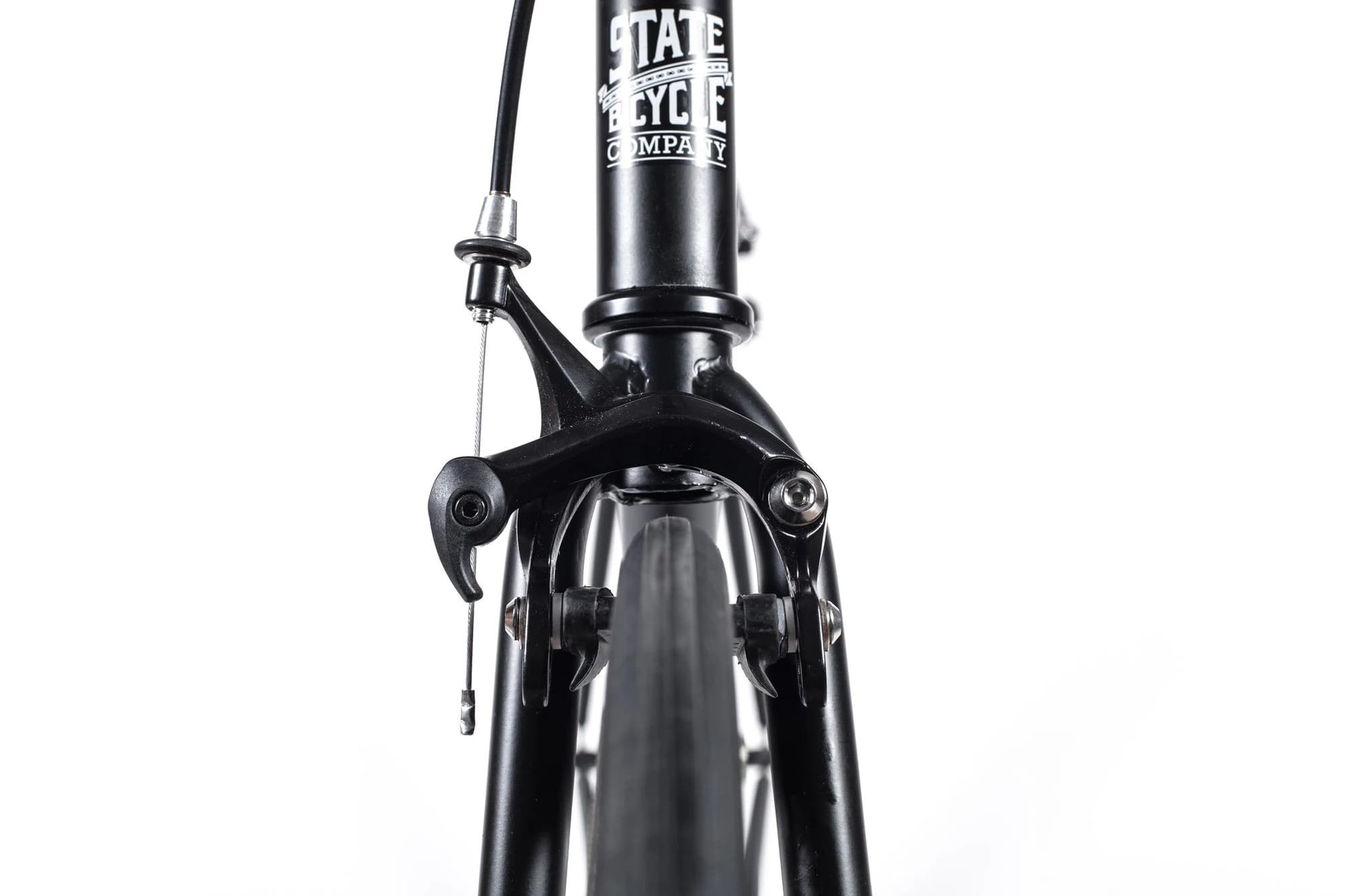
- the rear brake bridge;
- front and rear calipers;
- the chain and chainring;
- fenders, if installed.
The rear wheel moves in horizontal dropouts as chain tension is adjusted. Check clearance throughout the usable axle range—not just where the wheel happened to sit during one measurement.
25c: for smooth roads and tight frames
A 25c tire fits many older track-inspired frames and can feel sharp under acceleration. It makes sense when pavement is good, load is low, and the frame does not accept much more.
The penalty is a smaller margin for potholes, debris, and pressure mistakes. Pumping it to the highest sidewall number is not a performance plan. Pressure depends on total system weight, rim, tire, surface, and manufacturer limits.
28c: the easy road upgrade
For many riders, 28c adds noticeable comfort and grip without changing the character of the bike. It is a sensible first experiment if a 25c setup feels harsh but clearance is uncertain.
Confirm brake-caliper clearance during wheel removal as well as while riding. A tire that clears the frame but cannot pass through the brake without deflation may be inconvenient roadside.
32c: the urban middle ground
A quality 32c tire can absorb poor pavement, reduce chatter, and support longer street rides without feeling like a cruiser tire. It is often the strongest city compromise when the bike and rims allow it.
The extra volume lets riders use lower pressure than a narrower tire under the same conditions, but there is no single correct PSI for every rider. Start inside the tire and rim limits, use a reputable pressure calculator, and adjust in small steps while checking for rim strikes, squirm, harshness, and grip.
38c: when the frame was designed for it
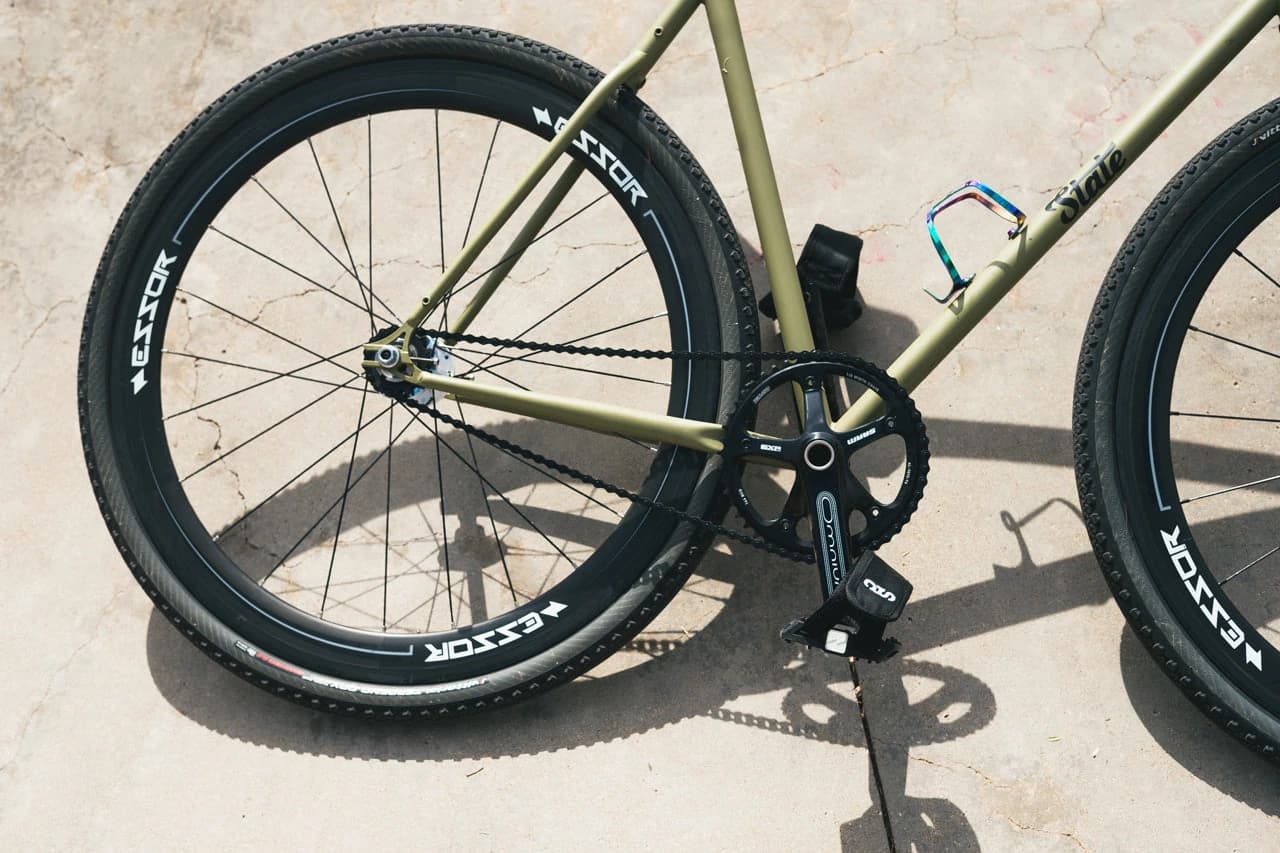
Modern all-road fixed-gear frames make 38c realistic. State's current 4130 platform, for example, is designed around wider street and hardpack use. That does not mean an older track frame can accept the same tire.
A 38c tire is useful for rough streets, hardpacked paths, heavier riders, bags, and riders prioritizing control over minimum weight. It is not permission to ignore toe overlap, fender clearance, or rim compatibility.
Browse State Fixed-Gear Tires, Wheels & Bikes
Pressure matters more than flexing a width number
Too high can reduce comfort and grip on rough surfaces. Too low can cause vague handling, rim strikes, pinch flats in tubes, or burping in an improperly configured tubeless system.
Record the tire, measured width, rider-plus-cargo weight, surface, and pressure. Change one variable at a time. That notebook will teach you more than copying a stranger's PSI.