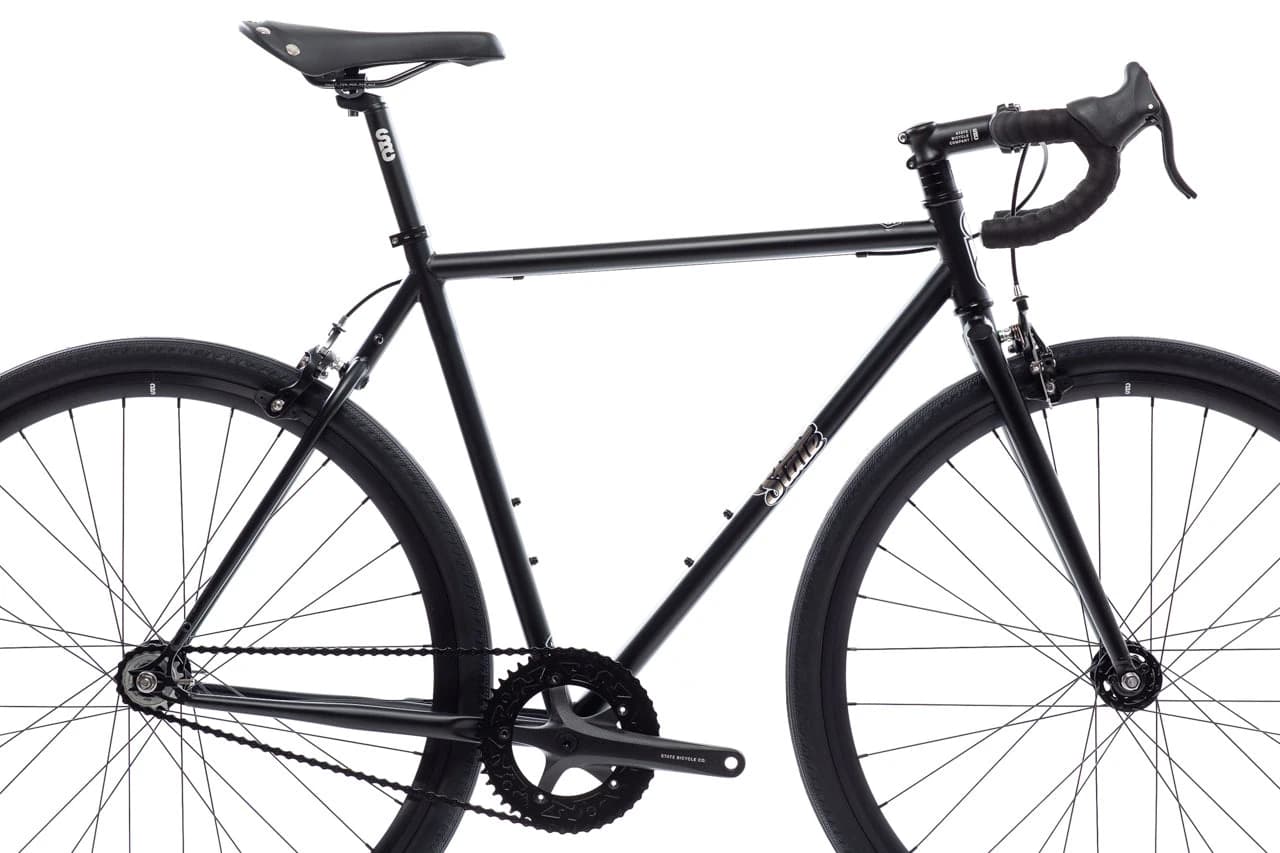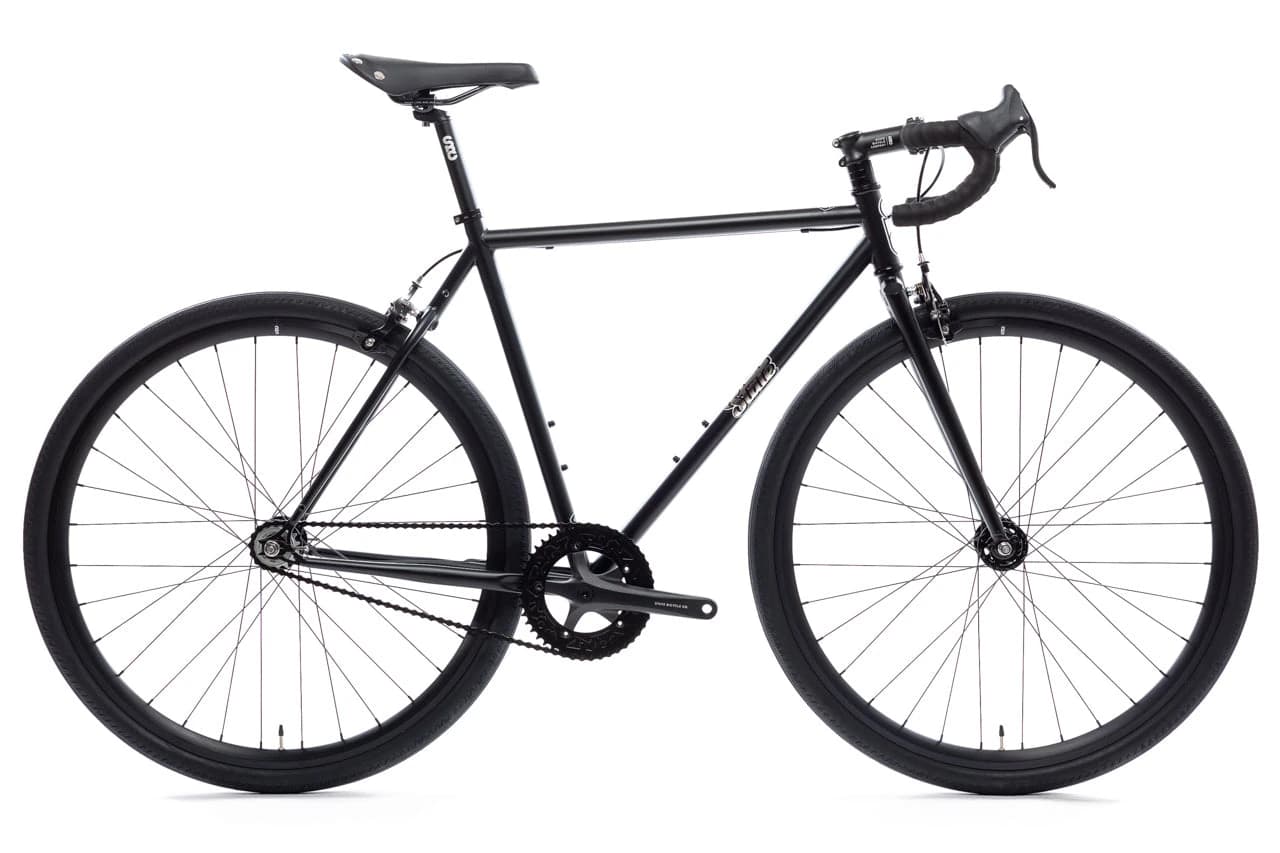
State Bicycle Co. makes three fixed-gear platforms that look similar in a product grid but serve different jobs. The question is not simply “which one costs more?” It is whether you need an affordable complete, a steel street bike with room to evolve, or a lighter alloy platform with track-bike intent.
Quick comparison
| Platform | Best for | Main reason to buy | Main reason to pause |
|---|---|---|---|
| Core-Line | First fixed gear, casual city use, tight budget | Lowest-cost entry into the lineup | Upgrade ceiling and current components must be checked model by model |
| 4130 | Daily street miles, rough pavement, long-term build | Double-butted 4130 chromoly platform with practical street intent | Heavier than the alloy race option |
| 6061 Black Label | Faster riding, lower weight, track-style response | 6061 alloy performance platform | Stiffer ride and higher spend may not help a utility build |
State itself positions the Core-Line as the entry-level option, the 4130 as the chromoly upgrade, and the 6061 Black Label as the race-ready line. That is a useful starting point, but the best bike still depends on surface, cargo, fit, and replacement budget.
Core-Line: get riding, then learn what matters
The Core-Line makes sense when the goal is to get a complete fixed gear without immediately building one piece by piece. It is the least expensive way into State's lineup and leaves money for the boring equipment that matters: a quality lock, lights, a helmet, a pump, and a front brake.
Buy it when you want:
- a first fixed gear;
- a neighborhood or short-commute bike;
- a platform for learning cadence and maintenance;
- a complete bike instead of a parts spreadsheet.
Do not assume every Core-Line colorway has identical current parts forever. Confirm the live spec, sizing, and brake setup on the product page before ordering.
4130: the street-workhorse choice
The current 4130 line uses double-butted 4130 chromoly tubing and sealed hubs. State lists the present generation as 2022 onward in its official specifications archive.
For an urban work-bike concept, this is the lineup's center of gravity. Steel is not magic and “compliance” gets exaggerated in bike marketing, but the 4130 gives you a durable, repairable-feeling platform without paying primarily for low weight.
It is the strongest fit when you expect:
- rough pavement and curb transitions;
- practical tires and a front brake;
- daily use instead of occasional track sessions;
- parts changes as you learn your preferred cockpit and ratio.
6061 Black Label: buy it for response
The 6061 Black Label is the performance choice. Alloy construction and track-oriented geometry make sense when low weight, acceleration, and sharp handling are the actual objective.
That does not automatically make it the best courier-style bike. A faster-feeling frame cannot compensate for poor fit, an over-geared drivetrain, skinny tires on broken pavement, or a setup you are afraid to lock outside.
Choose it when you already know you want:
- a lighter, stiffer ride;
- quicker track-bike response;
- fast group rides or velodrome crossover;
- a performance build rather than a utility-first build.
What I would choose for the NYC build plan
I am approaching this as a BMX rider preparing a durable urban bike—not pretending I already have years of NYC messenger experience. For that job, the 4130 is the most logical State starting point: practical enough for real street miles, better suited to an evolving build than the Core-Line, and easier to justify than paying for the Black Label's performance focus.
The Core-Line still wins if the budget needs to stay low. The Black Label wins if speed is the stated purpose. That is the whole decision tree.
Check these before checkout
- Use State's current size chart, not a generic height chart.
- Confirm the exact colorway's live components and tire clearance.
- Budget for secure foot retention and at least one effective brake.
- Pick the gearing for your route, not for a photo.
- Check replacement cost before building a bike you need to leave locked outside.
Compare Current State Fixed-Gear Models