An older fixed-gear frame can turn a “simple headset swap” into a stack of incompatible standards. The product photo is the easy part. The real job is matching the frame, fork, crown race, threads, and available stack height as one system.
My 2009 SE Premium Ale project is exactly why this deserves its own guide. A model name and year are not enough evidence to order a premium headset. The fork may have been replaced, the existing crown race may not match the cup standard, and a threaded steerer gives you almost no room to fake the stack.
The five measurements that matter
| Measurement | What it tells you | Common mistake |
|---|---|---|
| Steerer outside diameter | Whether the fork is nominally 1in or 1-1/8in | Measuring above damaged or painted threads |
| Thread pitch | Whether the top race and locknut match the fork | Assuming every threaded fork uses the same pitch |
| Head-tube bore | Which external cups fit the frame | Buying by steerer size alone |
| Crown-race seat | Which lower race fits the fork crown | Reusing a race from a different headset |
| Available stack height | Whether the full headset fits below the threads | Forgetting washers, spacers, or a cable hanger |
Use a clean caliper, measure more than once, and record the result before removing parts you may need for comparison. If a measurement lands between standards, stop and have a competent bike shop verify it.
Why stack height causes so many headaches
A threaded headset is adjusted with the top race and held with a locknut. The steerer must provide enough threaded length for the complete upper assembly while still allowing proper adjustment.
Too tall and the locknut cannot engage safely. Too short and extra threads above the locknut are not automatically harmless; the headset may be assembled incorrectly or the fork may require the correct keyed washer or spacer arrangement.
Do not grind, extend, or force a steerer to make an expensive headset fit. A fork is a structural component.
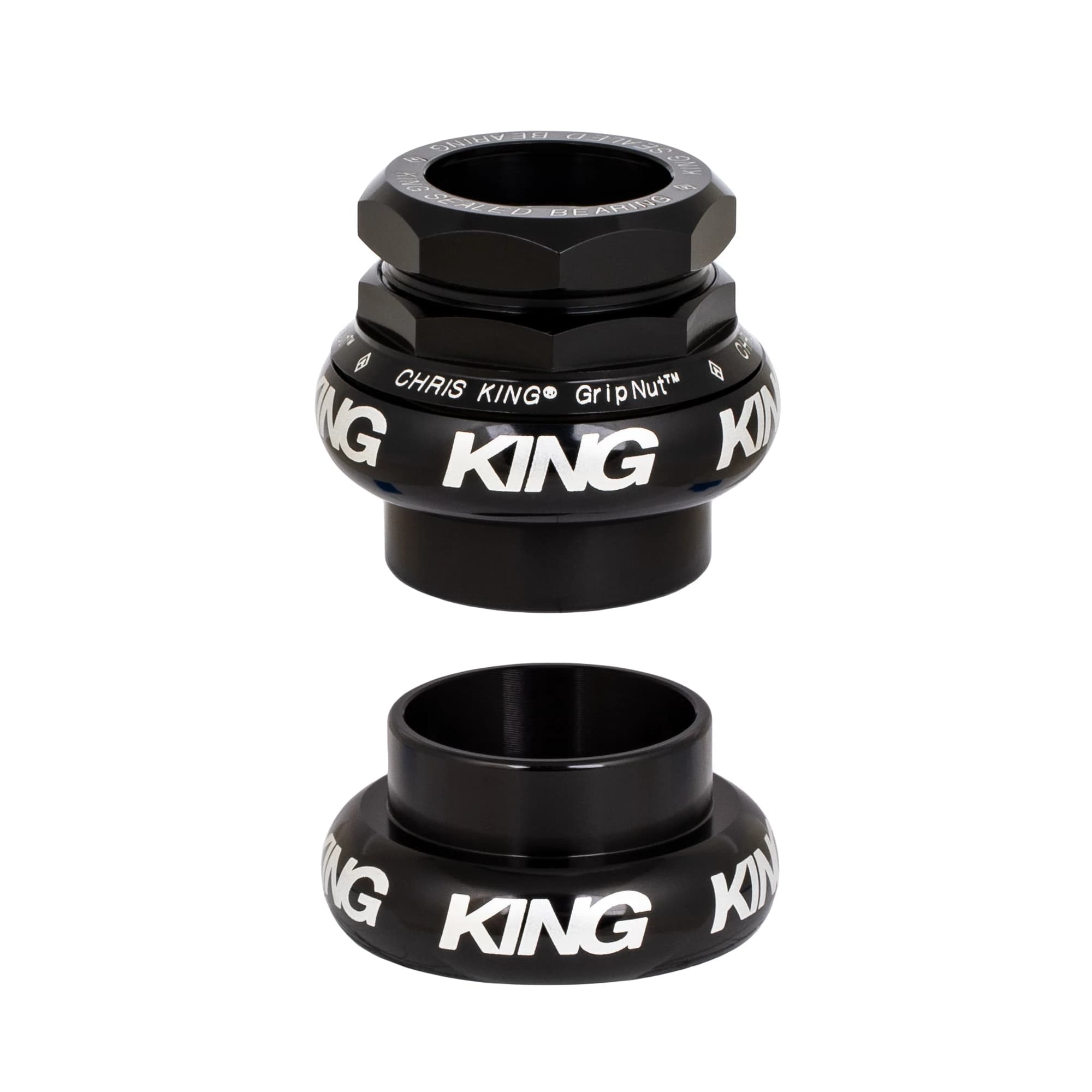
Where the Chris King GripNut fits
Chris King says the GripNut is intended for threaded forks that do not require a cable hanger or extra spacers. The current product is offered for:
- 1in threaded: EC30/25.4-24tpi with EC30/26.5 fitment;
- 1-1/8in threaded: EC34/28.6-26tpi with EC34/30 fitment.
Those are product specifications, not a promise that it fits your frame. The official GripNut page explicitly tells riders to verify compatibility before ordering.
The reasons to consider it are legitimate: a low-stack threaded design, a collet locking system, serviceable made-in-house bearings, and a lifetime warranty. But none of those features fix the wrong diameter, thread pitch, crown seat, or stack.
Check Chris King GripNut Options
A safe fitment workflow
- Photograph the current headset and every washer before disassembly.
- Confirm whether the fork is original to the frame.
- Measure steerer diameter and thread pitch.
- Measure the head-tube cup bores after the old cups are removed by the correct tool.
- Measure the crown-race seat on a clean, undamaged surface.
- Calculate available stack height from the frame and threaded steerer.
- Compare every number with the headset maker's drawing.
- Let a shop face, ream, or press parts if the frame actually needs it.
What not to do
- Do not hammer cups in with improvised drift tools.
- Do not file a crown race until it “kind of fits.”
- Do not mix upper and lower assemblies from unrelated headsets without verified compatibility.
- Do not assume the old bearing's printed size describes the frame interface.
- Do not buy the premium part first and reverse-engineer the bike around it later.
The real build lesson
Old-bike projects reward patience. Nitto cockpit parts, Sugino cranks, Time pedals, and a premium headset can make a beautiful build, but the frame and fork decide what fits. Measure the structure first; style the bike second.