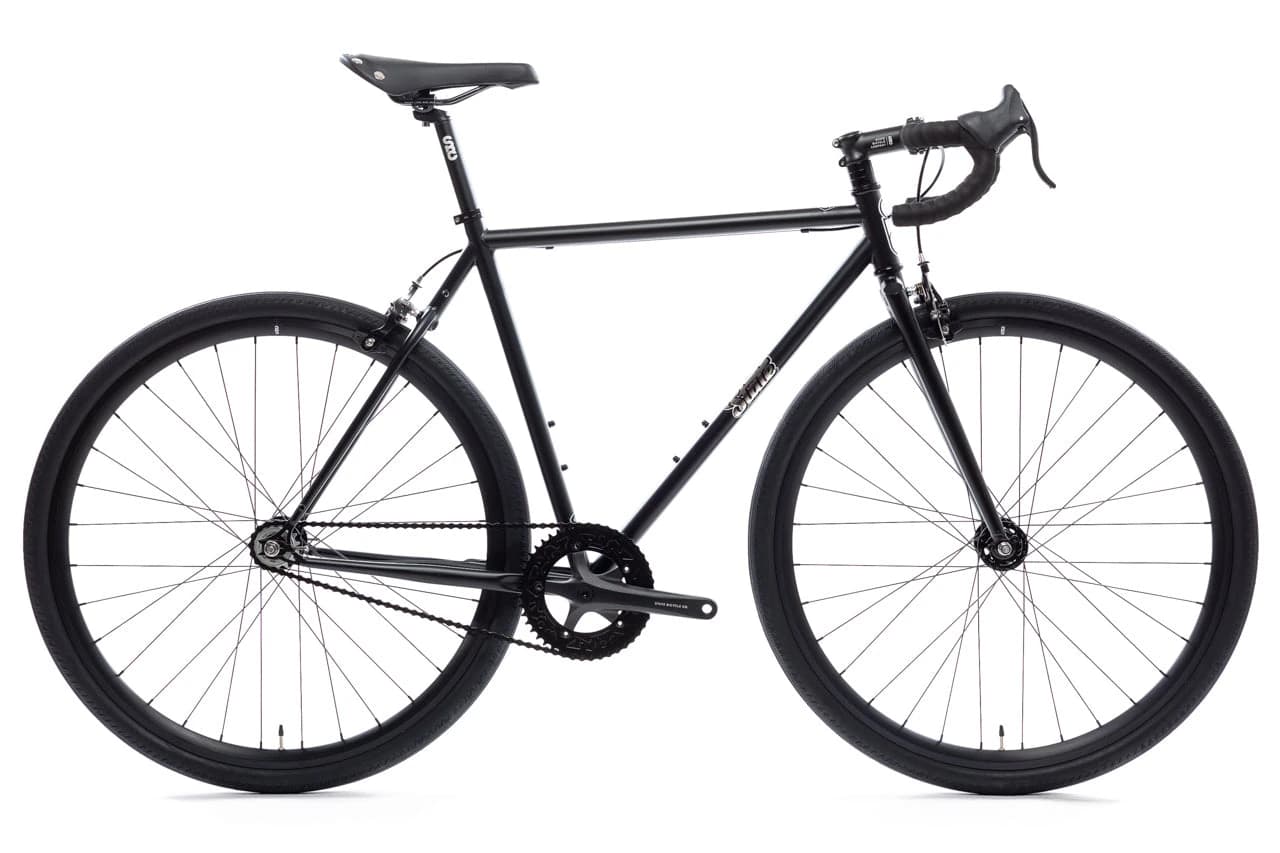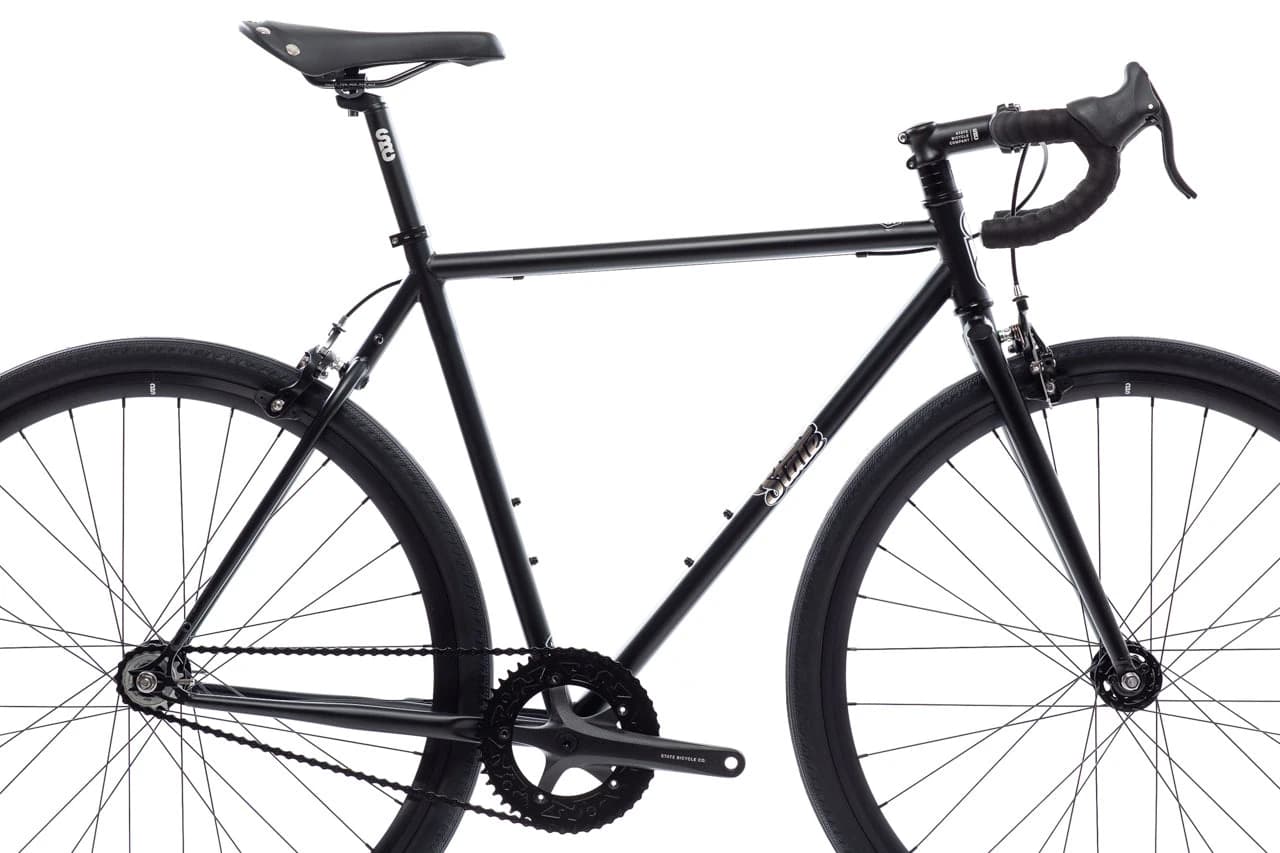
Changing from a 16-tooth cog to a 15-tooth cog sounds tiny. On a fixed gear, it is not. Your feet are tied directly to the rear wheel, so one tooth changes acceleration, cruising cadence, climbing effort, back-pressure, and how often the same patch of rear tire hits the pavement during a skid.
The short answer
- 48x16 is the better all-around street ratio for most riders. It starts easier, climbs better, and asks less from tired legs.
- 48x15 is about 6.7% harder. It gives more distance per pedal revolution and a calmer cadence at speed, but every start and hill costs more.
- For unknown routes, stop-and-go traffic, or a first fixed-gear build, start with 48x16.
- Move to 48x15 only when you are consistently spinning out and your knees are comfortable under fixed-gear load.
The numbers
The table uses a representative 700c tire circumference of 2.096 meters. Your exact rollout changes with tire size and pressure, so treat these as useful comparisons rather than laboratory measurements.
| Setup | Ratio | Development per crank turn | Speed at 90 rpm | Speed at 100 rpm |
|---|---|---|---|---|
| 48x16 | 3.00 | 6.29 m | 21.1 mph | 23.4 mph |
| 48x15 | 3.20 | 6.71 m | 22.5 mph | 25.0 mph |
The 15T cog adds roughly 0.42 meter of travel every time the cranks go around. That is useful on a long, clear avenue. It is less fun when a light changes, a grade kicks up, or your legs are cooked.
How each ratio feels
48x16: the practical baseline
This ratio gives you leverage for starts and enough top end for normal urban speed. It is easier to control when you are learning to resist the pedals, trackstand, and modulate speed through the drivetrain.
Choose it when your riding includes:
- frequent stops;
- rolling or uncertain terrain;
- loaded bags;
- longer days where fatigue matters;
- a mix of cruising and skill work.
48x15: faster, but never free
At the same road speed, the 15T cog lowers cadence. At the same cadence, it increases speed. The trade is higher torque at the knee during starts and climbs, plus more force required when you slow the bike through the pedals.
Choose it when:
- your routes are mostly flat and open;
- 48x16 regularly leaves you spinning beyond your comfortable cadence;
- your starts are already smooth;
- you are not using a harder gear to hide weak cadence technique.
Skid patches matter
For riders who skid, the tooth count changes how the rear tire wears. Reduce the gear ratio to lowest terms, then look at the rear-cog number:
| Setup | Reduced ratio | Same-foot skid patches | Both-foot skid patches |
|---|---|---|---|
| 48x16 | 3:1 | 1 | 2 |
| 48x15 | 16:5 | 15 | 30 |
That makes 48x15 dramatically better for distributing skid wear. It does not make skidding the safest or cheapest braking method. A front brake provides far more stopping force, and repeated skids can destroy a tire quickly even with many patches.
Do not choose gearing by ego
BMX power helps with acceleration, but fixed-gear street riding is repetitive. A ratio that feels strong for ten minutes can feel brutal after two hours. Pain at the front or sides of the knee is a reason to stop and reassess fit, cadence, and load—not proof that you need to toughen up.
The cheapest experiment is a cog swap. Keep the 48T ring, ride a 16T cog long enough to learn your routes, and move to 15T only if the data from your own legs says it makes sense.
Browse State Fixed-Gear Bikes & Parts