
Essential Lenses for Prosumer Action-Sports Filmmaking
When shooting BMX, skateboarding, or other high-octane sports, the right lens can transform your footage—turning static clips into dynamic, immersive visuals. Below, we’ll explore four key lens categories, discuss what to look for, and recommend top models for your prosumer camera rig.
Considerations by Lens Type
1. Wide-Angle Zooms (16–35 mm)
Perfect for immersive scene-setting and POV shots.
| Factor | Why It Matters |
|---|---|
| Field of View | Captures subject-plus-environment, ideal for wide park or trail contexts. |
| Distortion Control | High-end optics (aspherical, ED elements) minimize edge stretching for clean footage. |
| Aperture | f/2.8 constant lets in more light, critical for golden hour or indoor skateparks. |
| Close-Focus | Enables tight, low-angle shots—mount close to the bike or helmet without losing context. |
Recommended Models
- Sony FE 16–35 mm f/2.8 GM (for FX3, a7 IV)
- Canon RF 16–35 mm f/2.8 L IS USM (for R5 II, R5 C)
- Nikon Z 14–24 mm f/2.8 S (slightly wider; for Z 7 II, Z 6 II)
2. Standard Zooms (24–70 mm)
The versatile workhorse for both wide and mid-tele shots.
| Factor | Why It Matters |
|---|---|
| Zoom Range | 24 mm for environment, 70 mm for medium-tele close-ups—no lens swap needed mid-session. |
| Depth of Field | Wide aperture (f/2.8) lets you isolate riders against busy backgrounds. |
| Sharpness | Pro-level optics maintain edge-to-edge clarity at all focal lengths. |
| Portability | Still reasonably compact for all-day handheld or gimbal work. |
Recommended Models
- Sony FE 24–70 mm f/2.8 GM
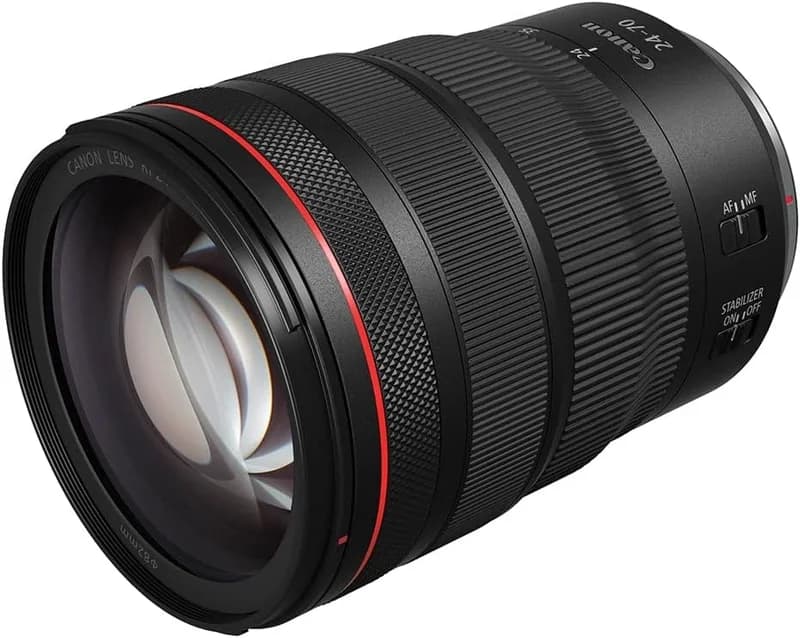
- Canon RF 24–70 mm f/2.8 L IS USM
- Panasonic Lumix S PRO 24–70 mm f/2.8 (for S5 II)
3. Telephoto Zooms (70–200 mm)
For tight in-frame action from a distance—perfect on sidelines or elevated vantage points.
| Factor | Why It Matters |
|---|---|
| Reach | “Long lens” perspective lets you film from safe distances while still filling the frame. |
| Compression | Flattens background, emphasizing speed and height in jumps or aerial tricks. |
| Stability | Often feature optical stabilization—critical for handheld or long-lens shake reduction. |
| Aperture | f/2.8 keeps subject separation and low-light performance high. |
Recommended Models
- Sony FE 70–200 mm f/2.8 GM OSS
- Canon RF 70–200 mm f/2.8 L IS USM
- Nikon Z 70–200 mm f/2.8 VR S
4. Fast Primes (35 mm, 50 mm, 85 mm)
Lightweight, ultra-bright lenses for low-light, stylistic B-roll, and cinematic cutaways.
| Focal Length | Use Case | Typical Aperture | Notes |
|---|---|---|---|
| 35 mm | Environmental B-roll; gimbal work | f/1.4–f/1.8 | Slightly wide—good for close run |
| 50 mm | Natural perspective rider portraits | f/1.2–f/1.8 | Versatile “nifty fifty” |
| 85 mm | Dramatic telephoto cutaways, headshots | f/1.2–f/1.8 | Shallow DOF for cinematic look |
Recommended Models
- Sigma 35 mm f/1.4 DG DN Art (Sony/E-mount & L-mount)
- Canon RF 50 mm f/1.2 L USM
- Sony FE 85 mm f/1.8
Building Your Action-Sports Lens Kit
| Lens Category | Sony FX3 / a7 IV | Canon R5 II / R5 C | Nikon Z 7 II / Z 6 II | Panasonic S5 II |
|---|---|---|---|---|
| Wide Zoom | FE 16–35 mm f/2.8 GM | RF 16–35 mm f/2.8 L IS USM | Z 14–24 mm f/2.8 S | Lumix S PRO 16–35 mm f/4 |
| Standard Zoom | FE 24–70 mm f/2.8 GM | RF 24–70 mm f/2.8 L IS USM | Z 24–70 mm f/2.8 S | Lumix S PRO 24–70 mm f/2.8 |
| Tele Zoom | FE 70–200 mm f/2.8 GM OSS | RF 70–200 mm f/2.8 L IS USM | Z 70–200 mm f/2.8 VR S | Lumix S PRO 70–200 mm f/4 OIS |
| Fast Prime | Sigma 35 mm f/1.4 DN Art; FE 85 mm f/1.8 | RF 50 mm f/1.2 L USM; RF 85 mm f/2 MACRO IS | Z 50 mm f/1.8 S; Z 85 mm f/1.8 S | Lumix S 50 mm f/1.4; Lumix S 85 mm f/1.8 |
Editing the footage: once the session is on the card, install Ollama and run local AI on your BMX footage, then automate BMX video editing with AI so every landed clip is found for you. No gaming PC? Edit BMX footage with a cloud GPU instead.
Final Tips
- Balance Speed vs. Reach: Wide lenses capture context; tele lenses isolate action. Mix and match for dynamic edits.
- Keep It Light: A heavy rig drains your energy. Prioritize f/2.8 zooms or f/1.8 primes for lens swaps on the fly.
- Stabilize: Use gimbals or shoulder rigs, especially with tele lenses—shaky footage is unusable in action sports.
- Protect Your Glass: Invest in front-element protectors, lens hoods, and weather sealing—dust and impacts are inevitable on the trails.
- Pre-Set Focus Zones: For predictable runs, set manual focus distances on primes to avoid focus hunting.
With the right lenses—wide zooms for immersive POVs, standard zooms for versatility, tele lenses for tight action, and primes for creative flair—you’ll be fully equipped to capture every BMX trick, jump, and shred in professional quality. Gear up, mount up, and roll cameras!


