What Are Pegs For?
Pegs are cylindrical extensions that bolt onto your axles. They let you grind ledges, rails, and coping — the core of BMX street and park riding. Most setups run 4 pegs (both axles, both sides) though some riders run 2 for a cleaner look or lighter weight.
Choosing Pegs
Steel pegs last longer and feel more predictable on rough surfaces. Plastic sleeves over steel pegs grind faster on concrete and wax-free surfaces — popular for park riders. Chromoly axles are required — do not run pegs on hollow or alloy axles, they can snap under grinding load. Length: 4 inches is standard, some riders prefer longer for more landing margin.
Installing Pegs
Thread the peg onto the axle nut and tighten. Most pegs have a hex bolt at the end for tightening — use a 6mm or 8mm hex key. Check tightness before every session; pegs can loosen with vibration. A loose peg mid-grind is dangerous.
Your First Grind: The Feeble
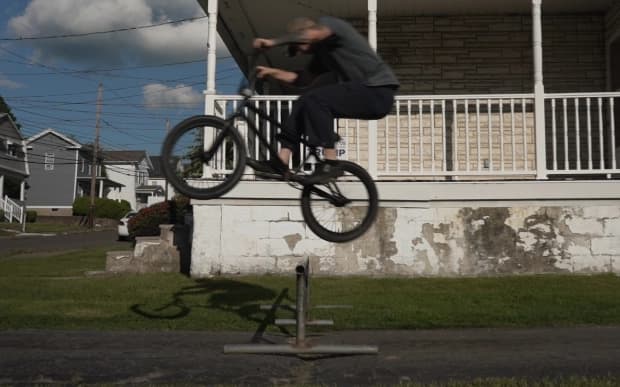
The feeble grind (front peg over the obstacle, rear wheel grinding) is the most beginner-friendly grind. Approach parallel to a low curb or waxed ledge. Bunnyhop with your weight shifted slightly so the front wheel clears the obstacle and your rear peg lands on it. Keep your weight centered and let the peg slide. To exit, hop out back to the ground or 180 out.
Waxing
Wax (skate wax, candle wax, or BMX-specific wax) dramatically reduces friction on ledges. Apply it by grinding the wax block against the surface a few times. Start learning on waxed surfaces — you'll slide more consistently and build confidence faster.
Summary
Pegs are a relatively cheap addition to your setup that massively expand your trick vocabulary. Start with a waxed curb and the feeble grind. The rest follows from there.