BMX Bike Setup Guide — Dial In Your Ride
Your BMX bike is an extension of your body. A poorly set-up bike fights you on every trick. A dialed bike feels like an extra limb. The difference between the two is often just 30 minutes and basic adjustments that most riders never make.
The Core Setup Variables
| Component | What to Adjust | Why It Matters |
|---|---|---|
| Seat height | Height off ground | Balance, trick clearance |
| Bar height + rise | Reach and pull angle | Bunny hop feel, bar spin clearance |
| Stem length | Distance from head tube | Steering responsiveness |
| Tire pressure | PSI in front + rear | Traction vs. rolling speed |
| Brake tension | Cable tightness | Stopping power and feel |
| Crank arm length | 165 vs. 170mm | Pedal clearance, power leverage |
| Spoke tension | Wheel roundness | Wheel stability under load |
Seat Height
Standard BMX setup: Seat positioned low — usually at hip crease height when standing beside the bike.
- Lower: Better for tricks, less interference during grinds
- Higher: More comfortable for long-distance riding
Most park and street riders run seats almost as low as they'll go. Seat height is the most personal preference variable — don't copy someone else's setup blindly.
How to adjust: Loosen the seat post clamp bolt, raise/lower to desired height, retighten. Torque spec: 5–6 Nm. Don't overtighten carbon seat posts (cracks them).
Bar Height and Rise
Bar rise is the vertical measurement from the bar clamp to the top of the bars (typically 6.5"–10" rise for BMX).
- Higher bars: Easier to pull for bunny hops and manuals; more upright posture
- Lower bars: More compact feel; better for technical tricks; lower center of gravity
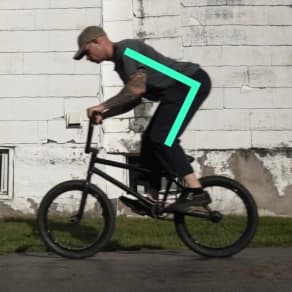
Finding your bar height: Stand on the bike in riding position. With bars at the right height, your back should be at roughly 45° to the ground and arms slightly bent — not reaching or cramping.
Common mistake: New riders often set bars too low, then blame their hops when the real issue is their bars aren't allowing a full pull.
Stem Length and Angle
Stem length controls how far forward the bars sit from your head tube:
- Shorter stem (48–50mm): More responsive steering; less reach
- Longer stem (53–55mm): More stable at speed; better for tall riders
Stem rise (up angle vs. flat) also changes bar height effectively — often the easiest way to raise your bars without buying new ones.
Tire Pressure
This is the most overlooked performance variable in BMX.
| Riding Style | Front PSI | Rear PSI |
|---|---|---|
| Park / Concrete | 100–110 | 100–110 |
| Street | 90–100 | 90–100 |
| Dirt / Trails | 40–60 | 50–65 |
| Pump Track | 70–90 | 75–95 |
High pressure: Faster rolling, less grip, more bouncy landings Low pressure: More traction, better bump absorption, more risk of pinch flats
Check tire pressure before every session. A pump with a gauge costs $15 and makes a measurable difference in riding feel.
Brake Adjustment
Even if you rarely brake, a poorly adjusted brake will unexpectedly grab or drag, causing crashes.
Cable tension check: Squeeze lever — brake should engage with 1–1.5 inches of lever travel, pad should clear rim by 2–4mm at rest.
Pad alignment: Pads should hit the rim brake track squarely — not rubbing the tire or hanging below the rim.
Gyro/Detangler users: Check the detangler bearing annually. A worn detangler is sloppy and affects brake feel significantly.
Chain Tension
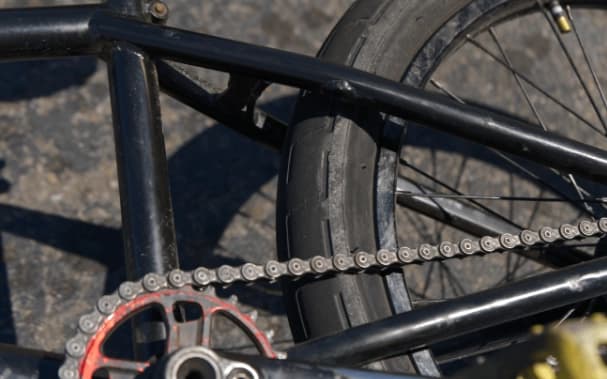
A loose chain skips and can buck you off. A too-tight chain wears your sprocket, crank, and hub.
Correct tension: 1/4" of vertical play when pressed at the midpoint of the chain run.
How to adjust: Loosen rear axle nuts, slide wheel back (chain tensioner blocks help maintain even tension side-to-side), retighten axle to 30–35 Nm.
Pre-Session Bike Check (5 Minutes)
Make this a habit before every ride:
- Tire pressure within range
- Axle nuts tight (front + rear)
- Stem bolts tight
- Bar ends capped (open ends = stake through palm in a crash)
- Chain tension correct
- Brake pads aligned and clearing rim
- Spoke tension — spin wheels, check for wobble
- Peg bolts tight
Essential Tool Kit
You don't need a full shop. Keep these in your bag:
| Tool | Use |
|---|---|
| 5mm Allen key | 90% of bolts on a modern BMX |
| 6mm Allen key | Axle bolts (many brands) |
| Pedal wrench (15mm) | Pedal removal/install |
| Chain tool | Trail repairs |
| Mini pump with gauge | Tire pressure |
| Spoke wrench | Wheel truing |
Conclusion
A dialed bike doesn't make you a better rider, but an undialed bike actively makes you worse. Spend 30 minutes going through these adjustments and you'll notice the difference in your first session. Bike setup is a skill — the more you do it, the faster and more intuitive it becomes.
Upgrade your riding with our training programs at BMX Gym Rats — technical and fitness guides for every level.